
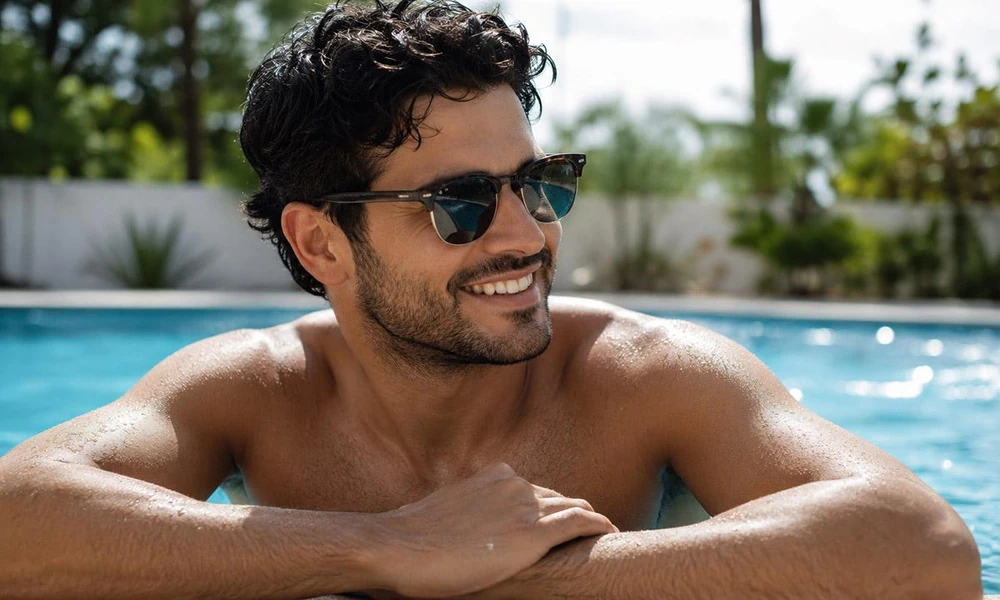
Summer sun and pool time both carry real risks for your eyes: UV exposure contributes to cataracts and other conditions over time, and chlorine can strip your eyes’ protective tear film. Sunglasses that block 100% of UVA and UVB rays, along with swim goggles, are simple tools that make a meaningful difference.
Summer brings more time outdoors and in the water, both of which come with eye health considerations that are easy to overlook until they cause a problem.
Not All Sunglasses Actually Protect Your Eyes
Dark lenses without UV protection can do more harm than wearing no sunglasses at all.
Look for sunglasses labeled as blocking 100% of UVA and UVB rays, since that’s the actual protective factor, not just how dark the lenses look. Dark lenses without genuine UV coating can be worse than no sunglasses at all, because your pupils dilate in the reduced light, which can let in more UV exposure rather than less.
Why Frame Coverage Matters Too
Larger frames or wraparound styles provide more complete coverage than small lenses, blocking UV rays that would otherwise reach your eyes from the sides. Pairing UV-protective sunglasses with a wide-brimmed hat adds another layer of protection for both your eyes and the surrounding skin.
Why UV Exposure Matters Long Term
Cumulative UV exposure over the years contributes to the development of cataracts and can also lead to pterygium, sometimes called “surfer’s eye,” a growth on the surface of the eye associated with long-term sun exposure. These effects build up gradually, which is exactly why consistent protection matters even on days that don’t feel especially bright.
Protecting Your Eyes in the Pool
Chlorine, while necessary for pool sanitation, can strip away your eyes’ natural protective tear film with prolonged exposure, leading to redness, irritation, and dryness sometimes called swimmer’s eye. Wearing well-fitted swim goggles creates a barrier that keeps chlorinated water away from your eyes entirely, and choosing goggles with UV protection covers both risks at once for outdoor pools.
After a Day at the Pool
If you’ve been swimming without goggles, gently rinsing your eyes with clean water afterward can help wash away residual chlorine before it causes lingering irritation. If redness or discomfort persists beyond a day, it’s worth having your eyes checked.
Taking a few simple steps can help protect your long-term eye health this summer. If you have questions about UV-related eye conditions or want a comprehensive eye exam, Anaheim Eye Institute is here to help.
Have questions about your vision or ready to explore your options? Book an Appointment or call 714.533.2020.
This content is for informational purposes only and is not a substitute for professional medical advice. Talk to your eye doctor about any persistent eye irritation or discomfort.
FAQ
What should I look for in sunglasses to protect my eyes? Look for sunglasses that block 100% of UVA and UVB rays, along with larger or wraparound frames for more complete coverage, rather than just choosing the darkest lenses.
Can dark sunglasses without UV protection actually be harmful? Yes, dark lenses without genuine UV protection can be worse than no sunglasses, since dilated pupils in the reduced light can let in more UV exposure.
How does UV exposure affect long-term eye health? Cumulative UV exposure over the years contributes to cataract development and can also cause pterygium, a growth on the eye’s surface associated with long-term sun exposure.
Why does chlorine irritate the eyes while swimming? Chlorine can strip away the eyes’ natural protective tear film with prolonged exposure, leading to redness, dryness, and irritation sometimes called swimmer’s eye.
What’s the best way to protect my eyes while swimming? Well-fitted swim goggles create a barrier against chlorinated water, and choosing goggles with UV protection helps with outdoor pools as well.
