

Have you ever looked in the mirror and noticed your lower ribs poking out, or perhaps felt a persistent ache at the base of your ribcage after a long day at the desk? This physical characteristic is often referred to as “rib flare.” While it might seem like a purely aesthetic concern, rib flare is frequently a sign of underlying postural habits and muscle imbalances that can lead to discomfort, restricted breathing, and back pain.
The good news is that you don’t have to live with the ache. By understanding why the ribs are protruding and implementing a few strategic movements, anyone can find significant relief from the comfort of home.
What exactly is Rib Flare?
Rib flare occurs when the lower ribs tilt upward and outward. This is typically tied to a “high-threshold” breathing pattern where a person breathes into the chest rather than the diaphragm and an anterior pelvic tilt. When the pelvis tilts forward, the lower back arches excessively, forcing the ribcage to expand forward to compensate. Over time, this puts strain on the intercostal muscles and the mid-back (thoracic spine).
To find relief, the goal isn’t just to “push the ribs down,” but to retrain the core and diaphragm to stabilize the torso correctly.
1. The 360-Degree Diaphragmatic Breath
The most effective way to address rib flare is from the inside out. Many people with rib flare are “chest breathers,” which keeps the ribs in a chronically flared position.
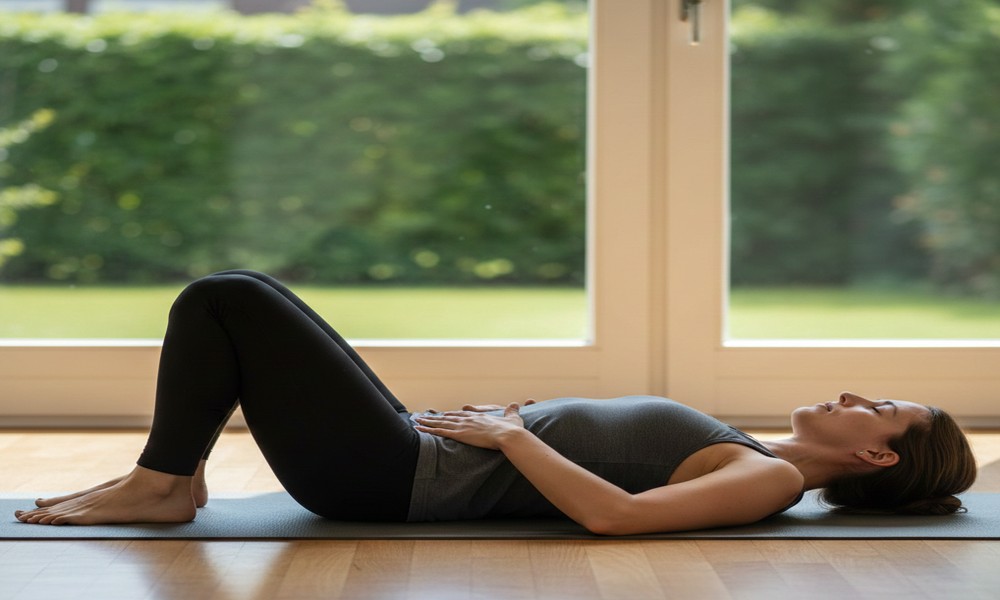
- How to do it: Lie on the back with knees bent. Place the hands on the sides of the lower ribcage. Inhale deeply through the nose, focusing on expanding the ribs outward into the hands, rather than letting the chest rise toward the chin.
- The Key: As you exhale through pursed lips, imagine the ribs “knitting” together and pulling down toward the hips. This engages the internal obliques, which are the primary muscles responsible for pulling the ribs back into a neutral position.
2. The Dead Bug for Core Stability
Once the breath is mastered, the body needs to maintain that rib position while the limbs are moving. The “Dead Bug” is a gold-standard exercise for this.
- How to do it: Lie on the back with arms reaching toward the ceiling and legs in a “tabletop” position (knees bent at 90 degrees).
- The Move: Slowly lower the right arm and left leg toward the floor simultaneously.
- The Challenge: Only go as low as possible without letting the lower back arch or the ribs flare up. If the ribs pop up, stop and reset. This move teaches the core to keep the ribcage “pinned” to the spine during daily activities.
Seeking Professional Guidance
While home exercises are a fantastic starting point, rib flare is often a complex issue involving muscle imbalances that a professional can identify more accurately. Elevate Physiotherapy stands out as a premier destination for those looking to resolve these underlying causes.
As a leading physiotherapy centre in Singapore, they offer a personalized and effective patient-centered care approach that goes beyond simple symptom management. What sets Elevate Physiotherapy apart is their commitment to one on one Treatment and their team of Multispecialty Therapists who understand the nuances of musculoskeletal health.
Furthermore, they utilize cutting-edge equipment and techniques, such as Radiofrequency and Shockwave therapy, to accelerate recovery. Whether pain stems from sports, posture, or a sedentary lifestyle, their goal-oriented therapy ensures a speedy recovery. For those with busy schedules, they are conveniently open 6 days a week, ensuring that expert care is accessible when it’s needed most.
Stop managing pain. Start living without it. Elevate Physiotherapy is here to help our community move better and live bolder. We partner with individuals and local professionals to silence the distraction of chronic aches, helping you return to your rightful spot at the height of health and mobility. Ready to reclaim your strength? Book your assessment today and take the first step toward the peak of health.